

Ultralight backpacking is a philosophy as much as a gear category: carry less weight so the miles feel easier and the trip becomes more about the experience than the burden. The movement defines itself by a simple number — a base weight of 10 pounds (4.5 kg) or less, meaning the weight of your gear before food, water, and fuel. Hitting that number requires rethinking every item you carry, from the tent to the toothbrush. This guide explains what ultralight backpacking actually means, how base weight is calculated, and how to start lightening your pack safely.
What Is Ultralight Backpacking? The Complete Guide to Packing Light
Sponsored: This article contains product links. We may earn a commission on qualifying purchases at no extra cost to you.
The Defining Number: Base Weight Under 10 Pounds
Ultralight backpacking is defined by base weight — the total weight of your gear excluding consumables (food, water, and fuel). The standard thresholds are:
Traditional backpacking: base weight over 20 lb (9 kg)
Lightweight: base weight 10-20 lb (4.5-9 kg)
Ultralight: base weight under 10 lb (4.5 kg)
Super ultralight: base weight under 5 lb (2.3 kg)
The 10-pound threshold is the movement’s anchor. Reaching it means every item earns its place: a tarp instead of a tent, a quilt instead of a sleeping bag, a frameless pack instead of a framed one. The payoff is measurable — a 10 lb lighter pack reduces energy expenditure on climbs and leaves hikers fresher at the end of each day.
Summary: Ultralight backpacking means a base weight under 10 lb (4.5 kg) — gear weight excluding food, water, and fuel. Reaching it requires choosing lighter alternatives for every item in the pack.
How Base Weight Is Calculated

Base weight = total gear weight − consumables. The calculation matters because it creates a consistent comparison between hikers. Your base weight includes:
- Pack
- Shelter (tent, tarp, or bivy)
- Sleep system (bag or quilt, pad)
- Stove and cookware
- Clothing worn and carried
- First aid kit and tools
- Navigation, headlamp, and electronics
Consumables — food, water, and fuel — are excluded because they vary by trip length and conditions. A 3-day supply of food adds roughly 6 lb (2.7 kg), so an ultralight hiker’s total pack weight typically lands around 16-20 lb (7-9 kg) on the trail.
The Big Four: Where the Weight Lives
Most base weight sits in four items — the “big four” of pack, shelter, sleep system, and cook system. Lightening these delivers the biggest returns:
Pack. A traditional framed pack weighs 4-6 lb (1.8-2.7 kg); an ultralight frameless pack weighs 1-2 lb (0.45-0.9 kg). The trade-off: frameless packs need a low base weight to be comfortable.
Shelter. A freestanding tent weighs 4-6 lb; a trekking-pole tarp tent weighs 1.5-2.5 lb; a simple tarp weighs under 1 lb. The trade-off: less protection from bugs and weather.
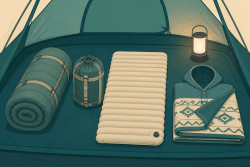
Sleep system. A mummy bag with a synthetic or down fill weighs 2-3 lb; a quilt weighs 1-1.5 lb. A foam pad weighs under 1 lb versus 1-1.5 lb for an inflatable.
Cook system. A full stove and cook set weighs 2-3 lb; an ultralight canister stove with a single pot weighs under 1 lb. The Jetboil Flash (see the Jetboil Flash) is a popular lightweight option at about 13 oz, boiling water in roughly 100 seconds.
Big Four weight comparison:
| Item | Traditional | Ultralight | Weight saved |
|---|---|---|---|
| Pack | 4-6 lb | 1-2 lb | 2-4 lb |
| Shelter | 4-6 lb | 1-2.5 lb | 2-4 lb |
| Sleep | 3-4.5 lb | 2-2.5 lb | 1-2 lb |
| Cook | 2-3 lb | 0.5-1 lb | 1-2 lb |
How to Start Going Ultralight
Going ultralight is a gradual process, not a gear-purchase spree:
Weigh everything. Buy a small scale and weigh every item you own. You cannot manage weight you do not measure. Most hikers discover 20-30% of their base weight is items they rarely use.
Weigh your pack last. The pack is the last thing to replace because its size depends on the rest of your gear. Lighten the shelter, sleep, and cook systems first.
Eliminate before replacing. Leave behind the camp shoes, the extra layers, and the “just in case” items. A spare pair of socks weighs 4 oz; a redundant knife weighs 3 oz — the ounces add up to pounds.

Know your limits. Ultralight gear trades comfort and durability for weight. A foam pad is lighter but less comfortable; a tarp offers less weather protection. Choose trade-offs that match your conditions and comfort.
The Risks and Realities
Ultralight backpacking is not for everyone, and the movement has real trade-offs. Frameless packs require disciplined packing. Minimal shelters demand better site selection and weather judgment. And gear failures matter more when you carry no backups. The responsible approach: start with a 15 lb base weight, learn what you actually use, and cut weight gradually as your skills grow. Safety — food, water, shelter, and first aid — is never the place to cut weight.
Related Topics You May Find Helpful
What Is the Difference Between Lightweight and Ultralight Backpacking?
Lightweight means a base weight of 10-20 lb (4.5-9 kg); ultralight means under 10 lb (4.5 kg). The difference is the degree of gear minimization — ultralight hikers typically use tarps, quilts, and frameless packs.
How Much Does an Ultralight Backpack Cost?
Frameless ultralight packs range from $150 to $300; ultralight shelters from $200 to $600; quilts from $200 to $400. The full setup costs more upfront than traditional gear but weighs half as much.
Is Ultralight Backpacking Safe?
Yes, when done sensibly. The key is never cutting weight from the safety essentials — food, water, shelter, and first aid. Ultralight hikers carry the same survival basics; they save weight on comfort and redundancy.
Frequently Asked Questions About Ultralight Backpacking
What is a good ultralight base weight for a beginner?
A 12-15 lb (5.4-6.8 kg) base weight is a realistic first target. It is significantly lighter than traditional backpacking without requiring the most extreme gear choices.
Do ultralight hikers use tents?

Some do — lightweight trekking-pole tents. Many use tarps, tarp tents, or bivy sacks, which weigh less but offer less protection from bugs and weather.
How much does ultralight gear actually save on the trail?
A 10 lb pack-weight reduction can save significant energy over a full day of hiking, particularly on climbs. Hikers consistently report feeling fresher and covering more miles with lighter packs.
Key Takeaways
- Ultralight backpacking means a base weight under 10 lb (4.5 kg) — gear minus food, water, and fuel.
- The “big four” — pack, shelter, sleep, and cook — hold most of the weight and offer the biggest savings.
- Weigh everything, eliminate before replacing, and lighten the pack last.
- Ultralight gear trades comfort and durability for weight — choose trade-offs to match your conditions.
- Never cut weight from safety essentials: food, water, shelter, and first aid.