
Did you know that nearly 60% of outdoor enthusiasts neglect the essential step of properly storing their seasonal gear, leading to premature wear and reduced functionality? According to a survey conducted by the Outdoor Industry Association, neglecting storage practices can diminish equipment lifespan by up to 50%.
Mastering Storage: The Unseen Adventure of Packing Gear for Hibernation
Storage is not merely an end to a thrilling adventure; it is an invitation to future escapades. Ensuring that gear is preserved correctly enhances its performance and keeps equipment ready when you are. However, many people skip or mess up crucial steps, like cleaning or drying equipment before storage. This guide delves into practical strategies for seasonal gear storage—transforming bins into promises of future adventures.
| Product | Description | Link |
|---|---|---|
| Weatherproof Storage Box | Durable, weather-resistant storage designed to protect your gear from the elements. | Explore Weatherproof Storage Boxes |
| Silica Gel Pack | Essential for preventing moisture damage and mold on your gear. | Discover Silica Gel Packs |
| Label Maker | Organize your storage with clear labeling to make retrieval a breeze. | Check Out Label Makers |
| Gear Maintenance Kit | A complete kit to clean and maintain outdoor equipment effectively. | Find Gear Maintenance Kits |
| Compression Storage Bags | Maximize storage space by reducing the volume of soft gear. | Shop Compression Storage Bags |
Practical storage solutions address the primary issues faced by outdoor enthusiasts—such as mildew, dust accumulation, and equipment damage. They are vital for ensuring that everything from tents and sleeping bags to hiking shoes and climbing gear is in optimal condition by the time the next season rolls around.
| Storage Challenge | Effective Solution | Benefits |
|---|---|---|
| Mold and Mildew | Use silica Gel Packs or drying gear before storage. | Prevents fabric damage and prolongs equipment life. |
| Space Limitations | Utilizing Compression Storage Bags. | Maximizes space while keeping gear accessible. |
| Disorganization | Implementing a Labelling System. | Facilitates swift retrieval, saving time and effort. |
| Weather Impact | Using Weatherproof Storage Boxes. | Protects gear from environmental elements, enhancing longevity. |
For various outdoor situations, gear storage is required after every adventure. Not only does it protect your investments, but it can also set the tone for future outings, evoking the excitement of exploration the moment you open your storage bins. The best practices for gear storage not only reduce clutter but also make it easier to organize gear by frequency of use—so you can minimize hassle when you’re ready to head back into the wild.
The journey doesn’t end when the adventure does; it continues through proper gear storage. Here are some crucial insights to maintain your gear effectively:
- Cleaning: Ensure everything is clean and dry before storing. Dirt, salts, and residues can deteriorate materials over time.
- Check zippers and straps: Inspect every component of your gear to ensure it’s functional for your next journey.
- Store in a climate-controlled space: If possible, keep gear in a cool, dry location to prevent temperature fluctuations and humidity.
- Rotate gear: Regularly move and reevaluate stored items to ensure they’re being used and maintained.
- Consider using recycled materials: Eco-friendly storage solutions can be beneficial both environmentally and practically.
| Glossary of Terms |
| Compression: A method used to reduce volume for more efficient storage, often involving vacuum-sealed bags. |
| Silica Gel: A desiccant that absorbs moisture, typically used to prevent mold and mildew in stored gear. |
| Weatherproof: Describes materials or containers designed to resist or protect against the elements, such as rain or snow. |
| Inventory Management: The process of tracking gear and equipment, ensuring availability when needed. |
| Desiccant: A hygroscopic substance used to induce or sustain a state of dryness in its vicinity. |
| Labeling: The practice of marking storage containers or bins to clarify their contents for easier locating. |
| UV Protection: A feature that protects gear from damage due to ultraviolet light exposure. |
| Mildew: A fungal growth that typically occurs in damp, unventilated environments. |
| Durable: Refers to materials designed to last under various stress conditions. |
| Eco-friendly: Products or practices that do not harm the environment and promote sustainability. |
| Outdoor Gear: Equipment designed specifically for outdoor activities, such as camping, hiking, or climbing. |
| Storage Capacity: The amount of gear that a storage solution can handle efficiently. |
| Seasonal Maintenance: Regular checks and care for gear as seasons change to ensure longevity. |
| First Aid Kit: A vital storage of necessary items in case of minor injuries while enjoying outdoor activities. |
| Insulation: Materials used to protect against heat loss or gain, particularly in sleeping gear. |
| Swag: A term often used in outdoor contexts to refer to personal gear or belongings. |
| Versatility: The ability of equipment to perform well in different conditions or uses. |
| Backup: Spare gear stored for emergencies or unexpected situations during expeditions. |
| Accessibility: The ease of retrieving stored items when needed. |
| Reflectivity: A surface property that helps to distribute light or heat, often used in thermal gear. |
| Eco-labels: Certifications that indicate products meet specific environmental standards. |
Storage is the last chapter of adventure—done well, it becomes an invitation.
Season’s End: Packing Gear for Hibernation
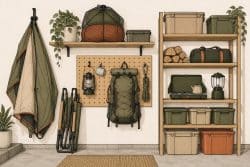

Dry first, fold second, label last—store by frequency of subsequent use, not size. Every bin is a promise to return.
Field Picks
- Weatherproof Storage Box — Compare boxes
- Silica Gel Pack — See packs
- Label Maker — Browse makers