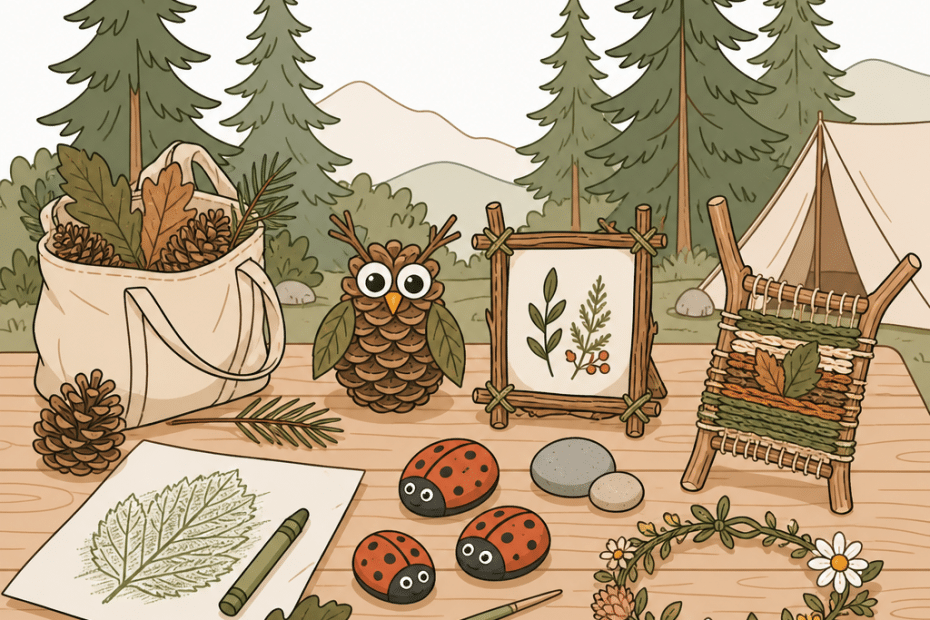
The best camping craft is the one made from what is already around you. Pine cones, pebbles, leaves, and twigs are free, site-specific craft materials that turn a walk into a collecting trip and a collecting trip into a project. Nature-based camping crafts also teach children to see the outdoors as a resource — and they cost nothing to replace when a project goes sideways. This guide covers the nature-first camping craft ideas that work for kids of all ages, plus the few store-bought supplies worth packing.
Camping Craft Ideas: 15 Nature-First Projects for the Campsite
Sponsored: This article contains product links. We may earn a commission on qualifying purchases at no extra cost to you.
Why Nature-First Crafts Work Better at Camp
Crafts built around found materials solve the two biggest camping craft problems: supply weight and boredom. Instead of packing a full craft bin, children collect materials during a nature walk — pine cones, pebbles, leaves, twigs — and turn them into projects at the picnic table. The activity becomes two experiences: the collecting walk and the making session. A 2020 study in the Journal of Adventure Education and Outdoor Learning found that using natural materials in children’s crafts increased engagement and creative output compared with identical projects using manufactured supplies [1].
Summary: Nature-first crafts use materials collected at the site, cutting supply weight and turning a walk into part of the project. Children show higher engagement with natural materials than with manufactured supplies.
The Minimal Supply Kit
You still need a few store-bought items to make nature crafts work:
Washable paint sticks. Solid color sticks for decorating rocks, cones, and wood — no brushes or water needed. The JUPITEARTH 24-color paint stick set (see the paint sticks) is the single most useful craft supply at camp.
Twist crayons. For leaf rubbings and drawing. The JUPITEARTH 12-color twist crayons (browse the twist crayons) work well on textured paper.
Googly eyes and glue. The fastest way to turn a pine cone or pebble into a creature.
Twine and a hole punch. For hanging and binding natural materials.
Card stock. A stable base for collages and frames.
Child-safe scissors. For cutting paper and fabric scraps.
15 Nature-First Camping Crafts
1. Leaf Rubbing
Place a leaf under paper and rub a twist crayon sideways over it. The veins appear instantly — a craft that doubles as a nature lesson.
2. Nature Weaving

Weave leaves, grass, and thin twigs through a cardboard loom or a forked stick. A textured wall hanging that captures the site’s plants.
3. Pebble Art
Paint smooth pebbles as ladybugs, turtles, or simple faces with paint sticks. Arrange them at the campsite or take them home.
4. Pine Cone Creatures
Glue googly eyes and paper beaks onto pine cones to make owls, bears, or hedgehogs. Endless variations with the same base.
5. Flower Crowns
Weave flexible stems and flowers into a crown — the classic summer craft. Works with wildflowers, daisies, and clover.
6. Twig Frame
Glue twigs into a square frame around a drawing or photo of the trip. Add twine to hang it at the tent.
7. Campfire Tic-Tac-Toe
Use a flat rock as the board (drawn with a paint stick) and two sets of nature pieces — pebbles vs. pine cones — as the marks.
8. Rock Stepping Stones

Paint a set of large, flat rocks and arrange them as a path to the tent. Washable paint keeps it removable.
9. Nature Collage
Glue leaves, petals, and small twigs onto card stock in any arrangement. Layer them for texture.
10. Bark Rubbings
Like leaf rubbing, but with bark: hold paper against a tree trunk and rub a crayon to capture the bark’s texture.
11. Twig Boats
Bind twigs together with twine, add a paper sail on a stick, and float the boat in a stream or bucket.
12. Leaf Crown
Punch holes in large leaves and thread them onto twine to make a leafy headband.
13. Nature Mandala
Arrange pebbles, petals, cones, and seeds in a circular pattern on the ground or a tray. A meditative, collaborative craft.
14. Stick Picture Frame

Bind four sticks at the corners with twine to make a frame, then tape a photo or drawing inside.
15. Seed Pod Rattles
Fill a small tin or a folded leaf pouch with seeds or small pebbles, seal it, and shake — a natural instrument.
Setting Up the Nature Craft Station
A nature craft station is simpler than a full craft setup:
Collect first. Start with a nature walk and a collecting bag. Set a loose rule — “find five different natural items” — to give the walk purpose.
Sort at the table. Spread the collection on the picnic table and let children sort by type (rocks, cones, leaves) before choosing their project.
Cover the surface. A vinyl cloth makes cleanup a wipe. Keep a bowl of water and a damp cloth nearby.

Leave No Trace. Return unused natural materials to the site at the end of the trip. Take home only the finished projects.
Best nature craft by age:
| Age | Best projects | Materials |
|---|---|---|
| 2-4 | Leaf rubbing, pebble art, nature collage | Crayons, paint sticks, glue |
| 5-7 | Pine cone creatures, twig boats, bark rubbing | Add googly eyes, twine |
| 8-12 | Nature weaving, flower crowns, mandalas | Add scissors, cardboard |
Related Topics You May Find Helpful
What Are Easy Crafts to Do While Camping?
Leaf rubbings, pebble painting, and pine cone creatures are the easiest — they need only found materials plus crayons, paint sticks, and glue. Each takes under 20 minutes.
How Do You Collect Nature Materials Responsibly?
Take only what has already fallen — pine cones, pebbles, leaves, and twigs on the ground. Never pull living plants or disturb habitats. Return unused materials to the site (Leave No Trace).
What Crafts Can Toddlers Do with Nature Items?
Toddlers can stamp pebbles with paint sticks, press leaves onto glue for a collage, and do simple leaf rubbings with adult help. Keep projects to 10-15 minutes.
Frequently Asked Questions About Camping Crafts
Do I need to pack craft supplies for a camping trip?
A minimal kit — paint sticks, twist crayons, glue, googly eyes, twine, scissors, and card stock — turns found nature materials into dozens of projects. This kit is lighter than a full craft bin.
Are nature crafts safe for young children?

Yes, with supervision. Avoid small items that pose choking hazards for children under 3, and check that collected plants are not toxic or thorny. Wash hands after handling.
How do I preserve nature crafts from a trip?
Flat pieces (rubbings, collages) go in a folder. Bulky items (pine cone creatures, twig frames) travel in a padded box. Photograph larger projects like mandalas before leaving them.
Key Takeaways
- Nature-first crafts use materials collected at the site — lighter to pack and more engaging for kids.
- A minimal kit (paint sticks, crayons, glue, googly eyes, twine, scissors) unlocks dozens of projects.
- Leaf rubbing, pebble art, pine cone creatures, and nature weaving are the core projects.
- Start with a collecting walk, sort at the table, and return unused materials (Leave No Trace).
- Match projects to age: stamping and rubbing for 2-4, building for 5-7, weaving and crafting for 8-12.